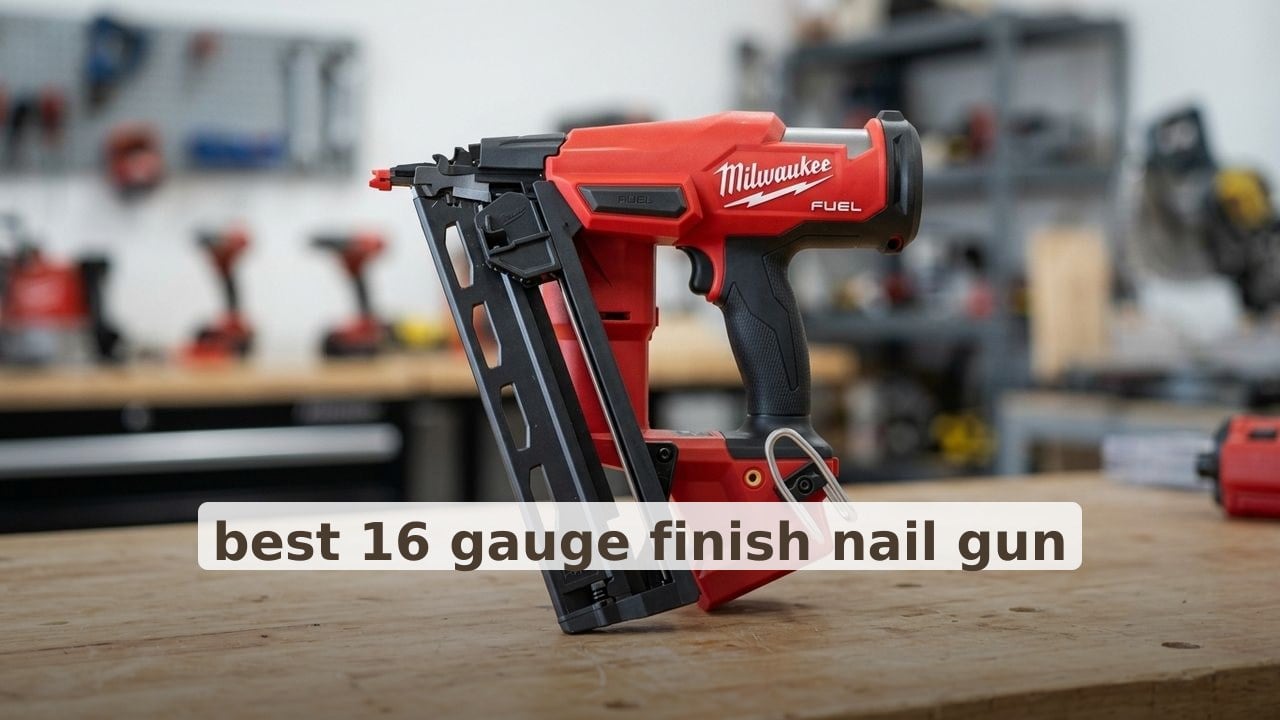
Best 16-Gauge Finish Nailers 2026 | Making DIY Easy
You need a tool that sinks nails flush without splitting trim, but you’re tired of dragging a compressor around the job site. The shift to cordless hasn’t been smooth. Some brands promise more power than they deliver, while others charge a premium for basic performance.
This guide looks at five specific models and focuses on what each one actually does, rather than repeating marketing claims. Here’s where the value lies in 2026.
Which cordless 16-gauge finish nailer actually deserves your money?
| Product | Price | Size | Buy |
|---|---|---|---|
| Milwaukee M18 FUEL 16-Gauge Angled Finish Nailer (Model 2841-20) | $329.00 for the bare tool and $399.00 for the kit | 1-1/4 inch to 2-1/2 inch 16-gauge angled nails | Search on Amazon |
| DEWALT 20V MAX XR 16 GA Cordless Angled Finish Nailer (Model DCN660) | $299.00 to $329.00 | — | Search on Amazon |
| Metabo HPT 18V MultiVolt 16-Gauge Cordless Finish Nailer (Model NT1865DSA) | $269.00 and $299.00 for the kit | — | Search on Amazon |
| Ryobi 18V ONE+ 16-Gauge Straight Finish Nailer (Model P326 / PBL370B) | — | — | Search on Amazon |
| Paslode 16 Ga Angled Cordless Finish Nailer (Model 902400 / IM250A-Li) | — | — | Search on Amazon |
Milwaukee M18 FUEL 16-Gauge Angled Finish Nailer (Model 2841-20)
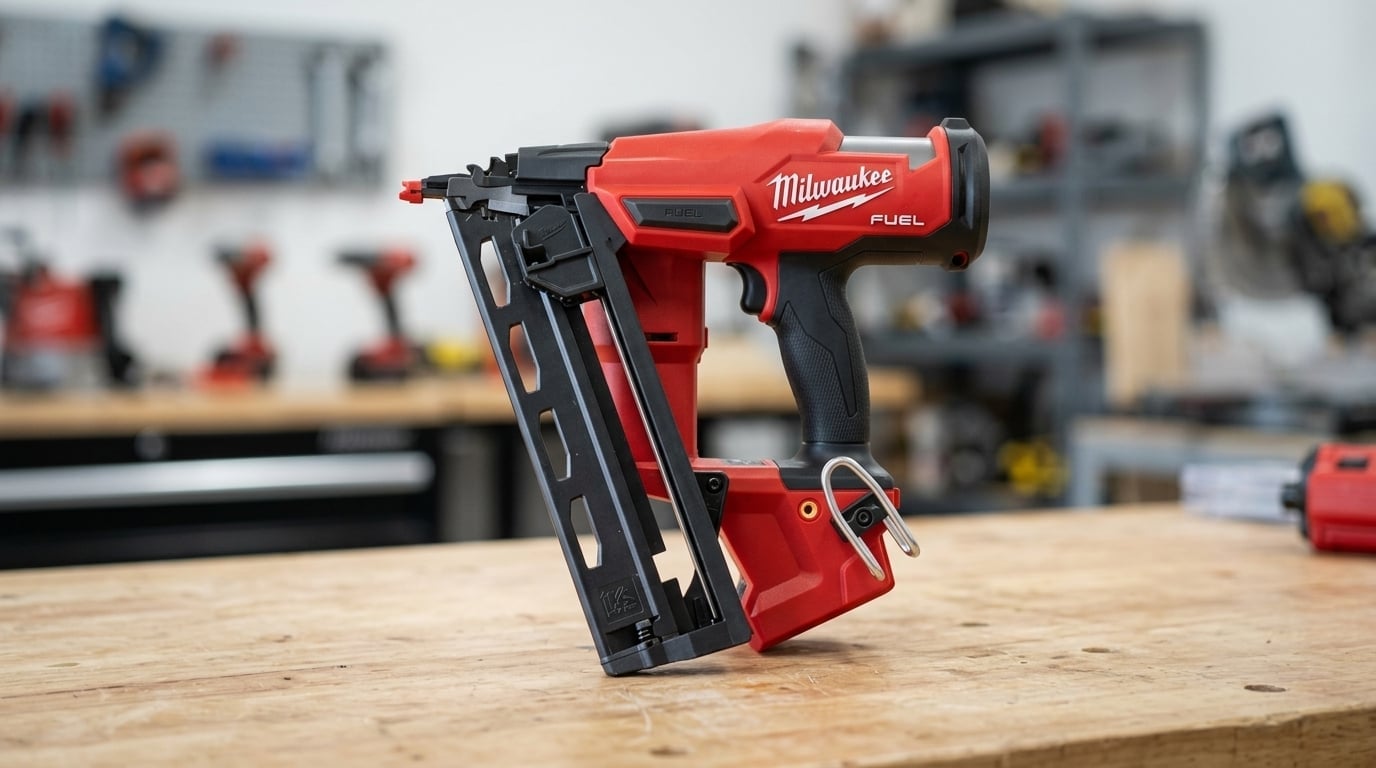
- Price: $329.00 for the bare tool and $399.00 for the kit
- Size: 1-1/4 inch to 2-1/2 inch 16-gauge angled nails
The Milwaukee M18 FUEL 16-Gauge Angled Finish Nailer (Model 2841-20) sits at the top of the price bracket, costing $329.00 for the bare tool and $399.00 for the kit. It drives 1-1/4 inch to 2-1/2 inch 16-gauge angled nails, which makes it ideal for tight corners and detailed trim work where straight nailers struggle to fit. This is an angled finish nailer, so expect better access in confined spaces compared to straight counterparts.
You pay more here, but you get a tool built for heavy daily use where reliability matters more than saving a few dollars upfront.
DEWALT 20V MAX XR 16 GA Cordless Angled Finish Nailer (Model DCN660)
- Price: $299.00 to $329.00
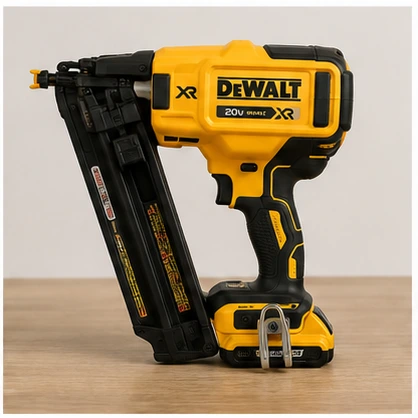
DEWALT counters with its 20V MAX XR 16 GA Cordless Angled Finish Nailer (Model DCN660), priced between $299.00 and $329.00. Like the Milwaukee, this is an angled finish nailer, offering similar access benefits for complex molding installations. The price point undercuts the Milwaukee slightly, making it a strong contender if you are already invested in the DEWALT 20V ecosystem.
It handles the standard range of finish tasks without fuss, providing a balanced option for pros who need consistent performance without the highest price tag.
Metabo HPT 18V MultiVolt 16-Gauge Cordless Finish Nailer (Model NT1865DSA)
- Price: $269.00 and $299.00 for the kit
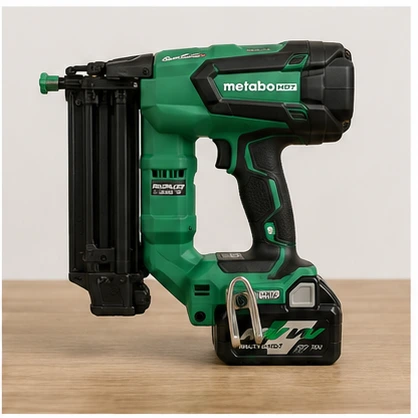
Metabo HPT updated its lineup with the 18V MultiVolt 16-Gauge Cordless Finish Nailer (Model NT1865DSA), a 2025 generation model that addresses common complaints about weight and power. It is 13% lighter and 15% more powerful than the previous NT1865DM(S) model, a significant improvement for anyone spending all day overhead or on ladders. Priced at $269.00 and $299.00 for the kit, it offers a compelling mix of modern efficiency and affordability.
If fatigue is your main enemy, this reduction in mass while boosting output makes it a smart switch.
Ryobi 18V ONE+ 16-Gauge Straight Finish Nailer (Model P326 / PBL370B)
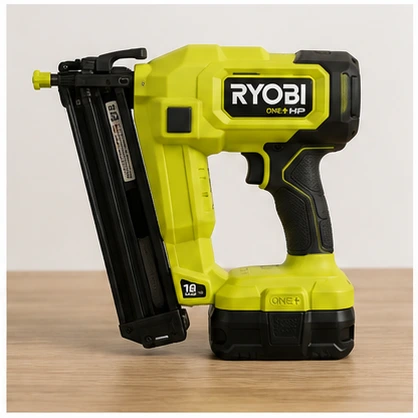
The Ryobi 18V ONE+ 16-Gauge Straight Finish Nailer (Model P326 / PBL370B) takes a different approach by using a straight magazine design. This configuration often allows for easier loading and a different balance point compared to angled tools, though it may not reach into tight corners as easily. It fits squarely into the DIY and light pro category, using the widespread availability of Ryobi batteries.
Without specific pricing or notes on power improvements, it remains a solid, no-frills choice for those who prioritize battery compatibility over specialized features.
Paslode 16 Ga Angled Cordless Finish Nailer (Model 902400 / IM250A-Li)
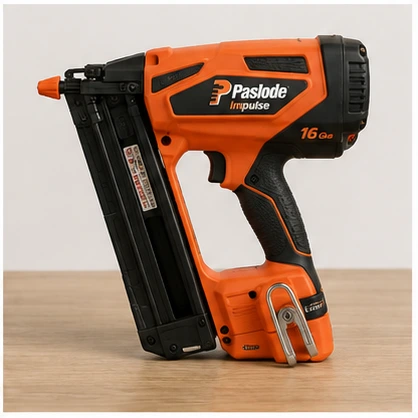
Paslode has long been a name in pneumatic tools, and its 16 Ga Angled Cordless Finish Nailer (Model 902400 / IM250A-Li) brings that heritage to the battery era. As an angled finish nailer, it provides the necessary clearance for detailed carpentry work. The lack of specific pricing or performance notes in the current data suggests it relies on brand reputation and established user trust.
It suits those who prefer Paslode’s ergonomic design and have had success with their previous gas-assisted or pneumatic units.
The main types explained
- Milwaukee M18 FUEL Angled Finish Nailer (2841-20): A premium option for pros who need strong driving power, it handles nails from 1-1/4 inch to 2-1/2 inch. It’s a good fit for users already invested in the M18 system. The bare tool costs around $329, while a full kit is near $399.
- DEWALT 20V MAX XR Angled Finish Nailer (DCN660): Priced between $299 and $329, this angled model suits carpenters who value the DEWALT name and consistent performance at a lower price than the Milwaukee.
- Metabo HPT MultiVolt Straight Finish Nailer (NT1865DSA): This 2025 model is aimed at users who want less fatigue during extended work. It’s 13% lighter and 15% more powerful than its predecessor. Kits cost between $269 and $299, making it a budget-friendly choice for buyers who prefer a balanced straight design.
How to choose
- Check whether your current cordless platform supports the model before buying a bare tool. Staying with one battery brand saves money on chargers and battery packs. The Ryobi 18V ONE+ fits into that system, while the Milwaukee M18 FUEL and DEWALT 20V MAX XR require their own batteries.
- Choose an angled nailer such as the Milwaukee 2841-20 or DEWALT DCN660 if you often work in confined spaces. A straight magazine can hit a wall or cabinet frame, while an angled head gets closer to corners without bruising nearby surfaces. That helps with detailed crown molding and toe-nailing in tight spots.
- Consider the Metabo HPT NT1865DSA if you want a lighter tool without giving up driving power. It claims to be 13% lighter and 15% more powerful than its predecessor. Less weight can ease fatigue during overhead work.
- Compare kit and bare-tool prices. Prices range from $269 for a Metabo HPT kit to $399 for a Milwaukee kit. If you already own compatible batteries, the $329 bare Milwaukee tool saves $70. New users may get better value from a DEWALT or Metabo HPT kit.
- Consider the Paslode IM250A-Li if you prefer an established cordless design that has been refined over time. Check that it suits your specific job site needs. It remains a dedicated angled option alongside newer brushless competitors.
Best picks by use case
If you’re already using Milwaukee M18 tools, the 2841-20 angled finish nailer is a sensible choice for heavier trim work. It drives 16-gauge nails from 1-1/4 inch to 2-1/2 inch, which covers most casing and baseboard jobs without requiring another nailer. The bare tool costs $329, while the kit costs $399.
The DEWALT DCN660 is a better fit for contractors who work in tight corners or around detailed molding. Its compact angled design reaches places straight nailers can’t, and the $299 to $329 price range keeps it competitive. As a 20V MAX XR model, it offers a useful balance of power and maneuverability for finish carpentry.
For budget-minded DIYers and people building a Ryobi ONE+ collection, the P326 or PBL370B straight finish nailer is a practical starting point. It doesn’t offer the same access in tight corners as an angled model, but it handles standard straight 16-gauge nails for trim and furniture projects. Existing Ryobi batteries can be used, which keeps the cost down for occasional home repairs.
Things to watch out for
Before buying a cordless finish nailer, check that its voltage matches your existing battery platform. An 18V battery won’t work with a 20V tool, so switching platforms may mean buying a new battery and charger. Check the magazine, too.
It may take angled or straight collated nails, and using the wrong type can cause jams and waste fasteners.
- The Milwaukee M18 FUEL drives 1-1/4 inch to 2-1/2 inch 16-gauge angled nails. It doesn’t accept straight collation or lengths outside that range.
- The Metabo HPT MultiVolt uses straight nails instead of angled ones. It therefore needs a different fastener strip than the Milwaukee, DeWalt, or Paslode options listed here.
FAQ
Which models use angled nails versus straight nails?
Most of the top contenders in this category use angled magazines, which can help when fitting into tight corners and doing trim work. The Milwaukee M18 FUEL (Model 2841-20), DEWALT 20V MAX XR (Model DCN660), and Paslode 16 Ga (Model 902400 / IM250A-Li) are all designed as angled finish nailers.
The Ryobi 18V ONE+ (Model P326 / PBL370B) is the only straight finish nailer in this group. If your existing toolkit or preference leans toward straight-collated fasteners, the Ryobi is the clear choice. The others require angled 16-gauge nails.
What nail lengths do these tools actually support?
Check the specifications for each model because they don’t all support the same nail lengths. The Milwaukee M18 FUEL drives 16-gauge angled nails from 1-1/4 inch to 2-1/2 inch, covering most standard casing, crown, and baseboard applications.
The provided details for the DEWALT, Metabo HPT, Ryobi, and Paslode models don’t list their minimum and maximum nail lengths. Verify the manufacturer’s rating for each tool before assuming it can handle the longest fasteners you have.
Are there any notable weight or power improvements in newer models?
The Metabo HPT 18V MultiVolt (Model NT1865DSA) is stated to be 13% lighter and 15% more powerful than its predecessor, the NT1865DM(S). For users who spend hours working overhead or in tight spaces, the lower weight may reduce fatigue.
The available data doesn’t give comparable percentage-based improvements for the other models. If power-to-weight ratio is your main measure, Metabo HPT has the clearest advantage on paper.
What is the price difference between bare tools and kits?
Budgeting depends on whether you already own batteries and chargers. The Milwaukee M18 FUEL costs $329.00 for the bare tool and $399.00 for the kit. The Metabo HPT lists a base price of $269.00 and a kit price of $299.00.
The DEWALT 20V MAX XR falls in the $299.00 to $329.00 range, though the available details don’t specify whether that difference reflects bare and kit options or market variance. No specific pricing data is provided for the Ryobi or Paslode models in this set, so check current listings for those two.
Conclusion
If you already use a battery platform, its cordless driver is usually the most convenient and cost effective choice. Starting from scratch? The Milwaukee M18 FUEL delivers the strongest performance, while the Metabo HPT balances power with lower weight.
Choose the tool that fits your workshop, and any of these drivers should serve you well.