Best Exterior Wood Glue: A Curated Roundup of Top Picks for Outdoor Projects
Outdoor wood projects face rain, humidity, and temperature swings that indoor joints never see. The adhesive decision therefore starts with exposure, not brand familiarity: a joint that stays covered has different demands from one that repeatedly gets wet. Choose a bond that withstands the expected moisture while maintaining strength and safety.
Here are five options, ranked by their specific strengths and limitations.
Which Exterior Wood Glue Actually Holds Up Outside?
|
Product |
Price |
Size |
Buy |
|---|---|---|---|
|
Titebond III Ultimate Wood Glue |
$9.98 for 16 oz and approximately $10.90 for a 118ml bottle |
1.25 oz to 1 gallon |
|
|
Gorilla Wood Glue |
$15.69 for 36 oz and approximately $8.50 for 8 oz |
— |
|
|
Gorilla Wood Glue Ultimate |
— |
— |
|
|
Elmer’s Carpenter’s Wood Glue Max |
approximately $5.00 for 8 oz and $14.60 for 16 oz |
4oz, 8oz, and 16oz bottles |
|
|
Loctite HB XE |
— |
— |
Titebond III Ultimate Wood Glue
- Price: $9.98 for 16 oz and approximately $10.90 for a 118ml bottle
- Size: 1.25 oz to 1 gallon
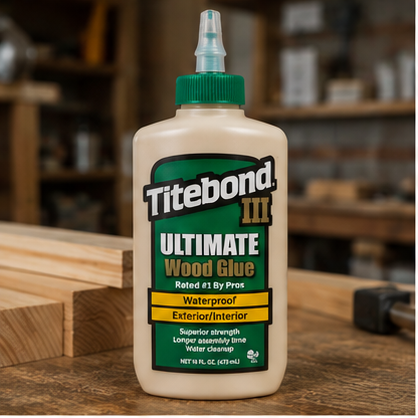
Titebond III Ultimate Wood Glue is the most broadly useful pick here when water resistance and food-contact certification both matter. It carries an ANSI/HPVA Type I waterproof rating and is FDA-approved for indirect food contact. That combination makes it especially relevant to cutting boards, salad bowls, and outdoor furniture that might hold food.
The tradeoff is workflow rather than capability. It must be applied above 47°F, needs 30–60 minutes of clamp time, and reaches full cure in 24 hours. It is also available in sizes from 1.25 oz to 1 gallon, including a 16 oz bottle at $9.98 and a 118ml bottle around $10.90.
Gorilla Wood Glue
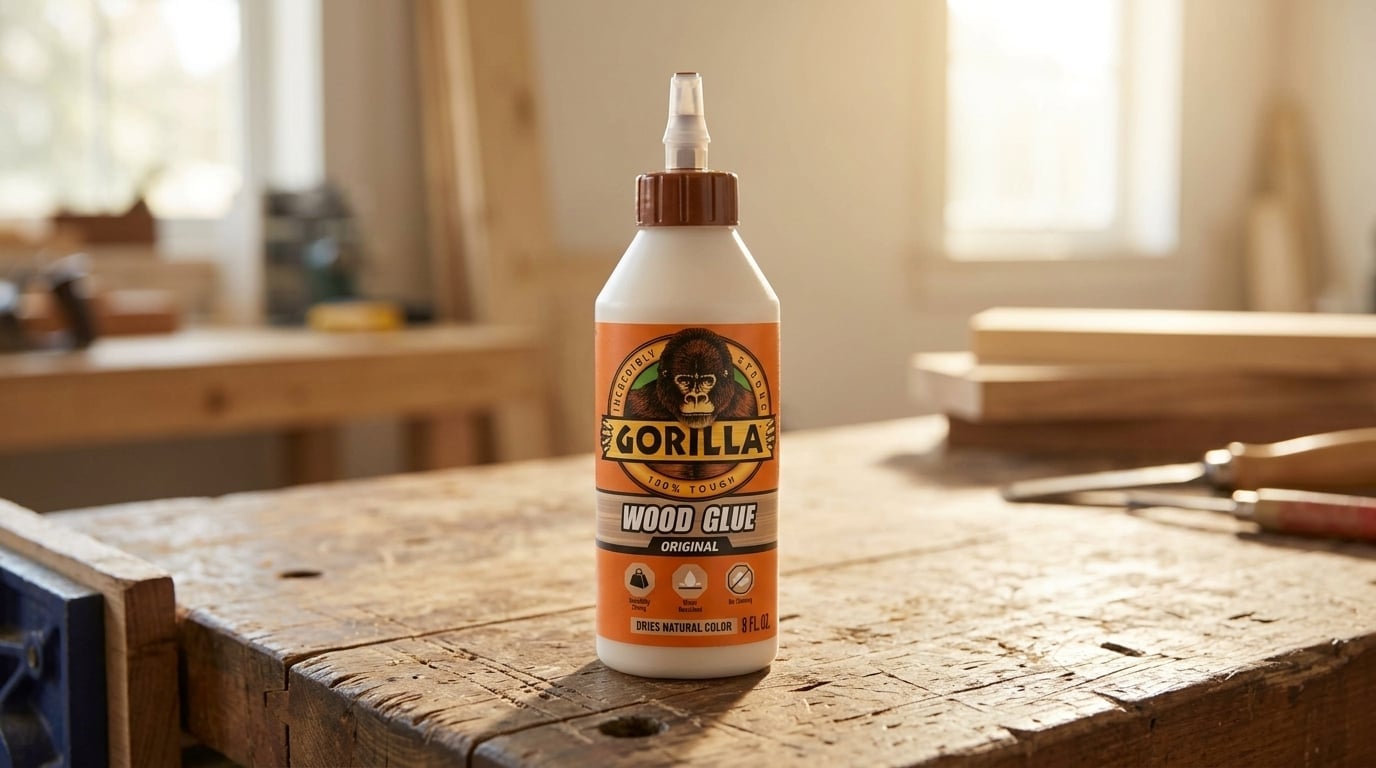
- Price: $15.69 for 36 oz and approximately $8.50 for 8 oz
Gorilla Wood Glue requires a closer label check because the name covers two formulations: standard Type II and Ultimate Type I. Standard Gorilla Wood Glue is suited to exterior exposure with less demanding water conditions, while the Ultimate version is the one intended for stronger waterproof protection.
The standard formula requires application temperatures above 55°F, 20–30 minutes of clamp time, and 24 hours for a full bond. Pricing is approximately $8.50 for 8 oz and $15.69 for 36 oz. Those details make it a practical choice for general repairs or covered outdoor projects, but not the automatic choice for constant wetness.
Gorilla Wood Glue Ultimate
Gorilla Wood Glue Ultimate is the Type I waterproof variant in the Gorilla line. It is the better match for outdoor furniture and joints facing direct weather exposure, particularly when standard Type II protection leaves too much uncertainty.
Choose this when the project’s exposure calls for Type I protection and you prefer the Gorilla line; choose standard Gorilla only when Type II coverage fits the conditions.
Elmer’s Carpenter’s Wood Glue Max
- Price: approximately $5.00 for 8 oz and $14.60 for 16 oz
- Size: 4oz, 8oz, and 16oz bottles
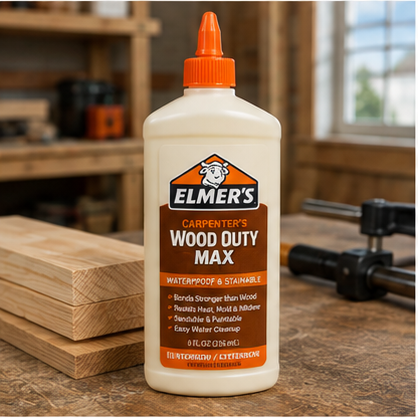
Elmer’s Carpenter’s Wood Glue Max emphasizes fiber-reinforced PVA rather than the Type I waterproof certification highlighted above. The reinforcement can help bridge small gaps and add tensile strength, which is useful when the joint or lumber is not perfectly uniform.
It comes in 4oz, 8oz, and 16oz bottles, priced around $5.00 for 8 oz and $14.60 for 16 oz. That gives buyers a lower-cost, smaller-scale option for general carpentry, sheds, fences, or repairs where gap-filling matters more than constant water exposure.
The limitation is worth keeping visible: the provided specifications do not list a specific waterproof certification. Treat it as a value-oriented adhesive for suitable outdoor conditions, not as a substitute for a clearly rated Type I glue.
Loctite HB XE
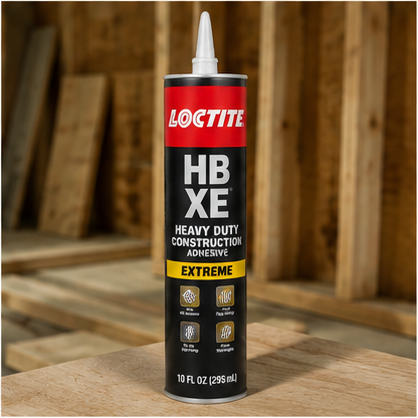
Loctite HB XE is described as a high-performance adhesive with rapid setting and strong initial grab. That profile points toward projects where holding the joint promptly is important, including demanding outdoor bonding tasks.
Specific pricing and size details are not provided here, and the supplied information does not identify a waterproof classification or food-contact certification. It is therefore better considered when setting speed and initial grab are the main priorities, rather than when a documented water rating is the deciding requirement.
The main types explained
For exterior work, the useful distinctions are waterproof classification, reinforcement, temperature requirements, and food-contact approval. Those categories overlap, but they do not answer the same buyer question. A Type I rating addresses prolonged water exposure; fiber reinforcement addresses imperfect joints; certification addresses a food-related use.
- Gorilla Wood Glue Ultimate: This Type I formula has higher water resistance than standard Gorilla Wood Glue, making it better suited to outdoor use. The standard formula is Type II and requires temperatures above 55°F, while the Ultimate version is designed for tougher conditions. Both formulas generally need 20–30 minutes of clamping and 24 hours to fully bond.
- Elmer’s Carpenter’s Wood Glue Max: Its fiber-reinforced PVA formula fills small gaps and forms strong bonds on porous surfaces. It is available in 4 oz, 8 oz, and 16 oz bottles, so it can work for small repairs as well as detailed carpentry projects where gap-filling matters.
How to choose
Start with the project’s exposure, then check the joint and the bottle size. A garden bench under cover may not need the same classification as a joint that repeatedly receives rain. Conversely, a smaller project can still justify Titebond III if food-contact approval is part of the requirement.
- For rough cuts or uneven joints, look for fiber reinforcement. Elmer’s Carpenter’s Wood Glue Max uses it to strengthen bonds and fill larger gaps.
- Match the bottle size to the job so you don’t waste glue. Titebond III comes in sizes from 1.25 oz tubes to a full gallon, while Elmer’s Max tops out at 16 oz.
- Compare unit prices before buying in bulk. Gorilla Wood Glue costs about $8.50 for an 8 oz bottle and $15.69 for a 36 oz container.
- If you’re testing a new brand, start with a smaller bottle. Elmer’s offers a 4 oz option, and Titebond III comes in a 118 ml size for roughly $10.90.
Waterproofing should guide the choice, but it is not the only constraint. Use Titebond III or Gorilla Ultimate for constant wetness, and consider standard Gorilla or Elmer’s for covered outdoor areas with occasional weather exposure when their other characteristics fit the joint.
Best picks by use case
For outdoor furniture or garden projects exposed to rain and humidity, Titebond III Ultimate Wood Glue is the clearest all-around choice in this list. It has an ANSI/HPVA Type I waterproof rating and costs roughly $10.90 for a 118ml bottle. Its FDA approval for indirect food contact also keeps it relevant when the same adhesive may be used on cutting boards or other food-related wood items.
For a large deck repair or significant gaps in rough lumber, Elmer’s Carpenter’s Wood Glue Max offers a lower-cost route at approximately $5.00 for an 8 oz bottle. Its fiber-reinforced PVA formula is designed for tougher, porous surfaces, and the 16 oz option costs $14.60 for larger jobs. The value depends on the project not requiring an explicitly listed Type I waterproof certification.
Budget-conscious DIYers repairing indoor shelves or trim can look to Gorilla Wood Glue. It provides a Type II bond for about $8.50 per 8 oz bottle, which suits everyday repairs that don’t need full waterproofing. If the project later requires Type I water resistance, Gorilla’s Ultimate formula is the next step, the same distinction that matters for outdoor work.
Things to watch out for
A strong bond depends on matching the adhesive to both the weather and the workflow. Temperature and clamp time are easy to overlook because waterproof ratings receive more attention, yet a suitable rating does not remove the need to apply and hold the joint within the stated conditions.
- Titebond III requires an application temperature above 47°F for proper curing. Keep the workspace warm if you’re working in a chilly garage.
- Standard Gorilla Wood Glue needs temperatures above 55°F for proper adhesion.
- Titebond III needs 30 to 60 minutes of clamp time. Standard Gorilla Wood Glue sets slightly faster, with a 20 to 30-minute clamp time.
- Both adhesives need a full 24 hours to reach maximum bond strength before you put the joint under stress.
- For glued items used near food preparation areas, Titebond III is FDA-approved for indirect food contact. The other listed options do not have this specific certification.
FAQ
Which glue actually holds up to rain and snow?
For an outdoor project, choose a glue with an ANSI/HPVA Type I waterproof rating. Titebond III Ultimate carries that certification, and Gorilla also offers an Ultimate formula with Type I status. Gorilla’s standard option is Type II, so the exact formulation matters.
Elmer’s Carpenter’s Wood Glue Max is a fiber-reinforced PVA that adds strength, but the provided details don’t list a specific waterproof certification. For decks or garden furniture exposed to constant moisture, use one of the explicitly rated Type I options.
Can I use these on cutting boards or salad bowls?
Titebond III is the clear choice because it’s FDA-approved for indirect food contact. That makes it suitable for butcher blocks or wooden utensils that touch food.
The other adhesives listed don’t carry this specific approval in their provided specifications. For anything that will sit on a kitchen counter or hold food, check the label carefully. Titebond III is the only one explicitly cleared for that use case.
What sizes are available if I have a large deck to repair?
Titebond III offers the widest range, with bottles spanning from tiny 1.25 oz tubes up to full gallons. That covers projects from a single chair leg to a large surface area.
Elmer’s Carpenter’s Wood Glue Max comes in 4 oz, 8 oz, and 16 oz bottles. Gorilla Wood Glue is available in 8 oz and 36 oz containers. Check the project size before buying. Running out of glue halfway through a large exterior structure is a headache worth avoiding.
Is there a difference between Gorilla’s standard and Ultimate wood glues?
Yes. The main difference is water resistance. Standard Gorilla Wood Glue is a Type II adhesive, while the Ultimate version has a Type I waterproof rating.
Type I glues withstand prolonged exposure to water and weathering, so they suit exterior applications better. For an outdoor project, choose the Ultimate formula over the standard version when the joint will face sustained wet conditions.
Conclusion
If you need one bottle for projects ranging from patio furniture to cutting boards, Titebond III Ultimate Wood Glue is the strongest general recommendation in this roundup. It’s FDA-approved and carries a Type I waterproof rating. Gorilla Wood Glue Ultimate fits buyers who prefer that line and need Type I protection, while Elmer’s Carpenter’s Wood Glue Max offers a budget-friendly, fiber-reinforced option for general repairs where the listed waterproof certification is not the priority.
Choose the glue based on how much water your project will face, then confirm the temperature, clamp time, and intended use before applying it.