
Best Miter Saw With Slide: 9 Top Picks for Precision Cuts in 2026
You need clean, repeatable crosscuts and bevels without wrestling with a stiff rail or a wobbling blade. Sliding compound miter saws increase cut capacity, but their slides vary in smoothness and durability. This list covers nine distinct models, from heavy-duty corded workhorses to innovative cordless options, with a clear look at what each one offers and who it is for.
Which sliding miter saw actually deserves your shop space?
| Product | Price | Size | Buy |
|---|---|---|---|
| DeWalt DWS780 | $599.00 to $649.00 | 12-inch | Search on Amazon |
| DeWalt DWS779 | $599.00 to $649.00 | 12-inch | Search on Amazon |
| Makita LS1019L | $549.00 to $750.00 | 10-inch | Search on Amazon |
| Bosch GCM12SD | $649.00 to $729.00 | 12-inch | Search on Amazon |
| Bosch EXCM341-305GD | — | — | Search on Amazon |
| Metabo HPT C10FSHCT | — | — | Search on Amazon |
| Milwaukee 2734-20 | — | 10-inch | Search on Amazon |
| MarvTool 10-Inch Miter Saw | — | — | Search on Amazon |
| Festool Kapex KS 120 REB | — | — | Search on Amazon |
DeWalt DWS780
- Price: $599.00 to $649.00
- Size: 12-inch
The DeWalt DWS780 remains a benchmark for 12-inch sliding compound performance. Weighing 56 lbs, it strikes a balance between portability and the mass needed to dampen vibration during heavy cuts. This corded saw has been a staple since its 2011 release, proving that a well-engineered design does not need constant reinvention.
It retails for $599.00 to $649.00, though savvy shoppers found it on sale for $499.00 in late 2025 and 2026. If you want a proven, durable tool that handles wide crown molding and large trim packages without fuss, this is the safe, reliable choice.
DeWalt DWS779
- Price: $599.00 to $649.00
- Size: 12-inch
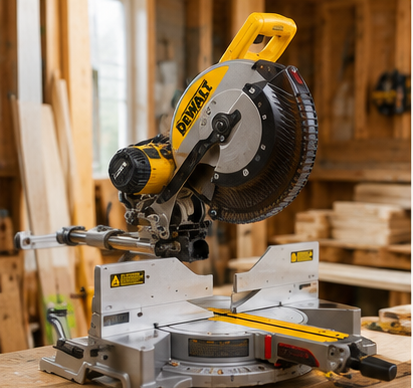
DeWalt also offers the DWS779, which shares the same 56 lb weight and 12-inch corded sliding compound architecture as its sibling. Priced identically at $599.00 to $649.00, it serves as a solid alternative for those who prefer DeWalt’s ergonomics but may find slight feature differences in the DWS780 unnecessary for their workflow. It delivers the same core capability: deep, accurate slides for wide boards.
For contractors who already own DeWalt batteries or prefer their handle geometry, this model provides identical cutting capacity and stability. It is a straightforward, no-nonsense tool for high-volume framing and finish work.
Makita LS1019L
- Price: $549.00 to $750.00
- Size: 10-inch
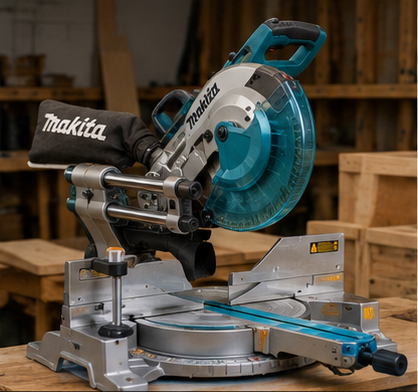
Makita takes a different approach with the LS1019L, a 10-inch dual-bevel sliding miter saw that features a rail-forward design. This layout keeps the rails in front of the fence, saving significant rear clearance and allowing you to place the saw closer to a wall. Retailing for $549.00 as a bare tool and up to $750.00 for a kit with a stand, it appeals to users with tight workshop footprints.
The 10-inch blade spins faster than larger counterparts, often yielding cleaner cuts in fine trim. If you prioritize space efficiency and dual-bevel convenience without needing the massive depth of a 12-inch saw, this is a compelling, compact option.
Bosch GCM12SD
- Price: $649.00 to $729.00
- Size: 12-inch
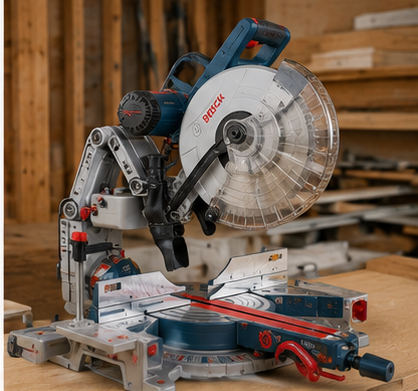
The Bosch GCM12SD redefines how a slide feels by replacing traditional rails with an Axial-Glide system. This mechanism allows the saw head to glide forward and back smoothly, eliminating the side-to-side play common in rail-based designs. Weighing 65 lbs, it is heavier than the DeWalt alternatives, but the trade-off is exceptional precision and a smaller footprint since no rear clearance is needed for sliding rails.
It retails for $649.00 to $729.00, with aggressive pricing seeing it drop to as low as $368.00 at select retailers in early 2026. For woodworkers who value silky-smooth operation and absolute accuracy over raw portability, this is the premium pick.
Bosch EXCM341-305GD
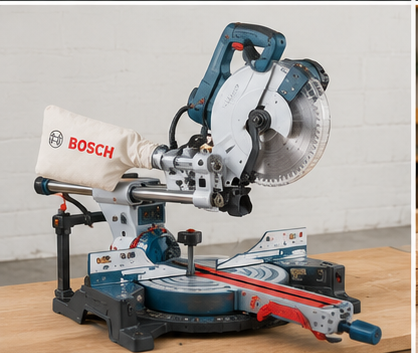
Bosch expands its lineup with the EXCM341-305GD, a model that continues the brand’s focus on glide-style mechanics. While specific pricing and weight details are not listed here, it fits into the ecosystem of tools designed for users who demand high-end cutting fluidity. It represents another avenue for those who appreciate Bosch’s engineering approach to reducing friction and improving cut consistency.
Look to this model if you are already invested in the Bosch platform and seek a specialized sliding solution that prioritizes smooth action over traditional rail systems.
Metabo HPT C10FSHCT
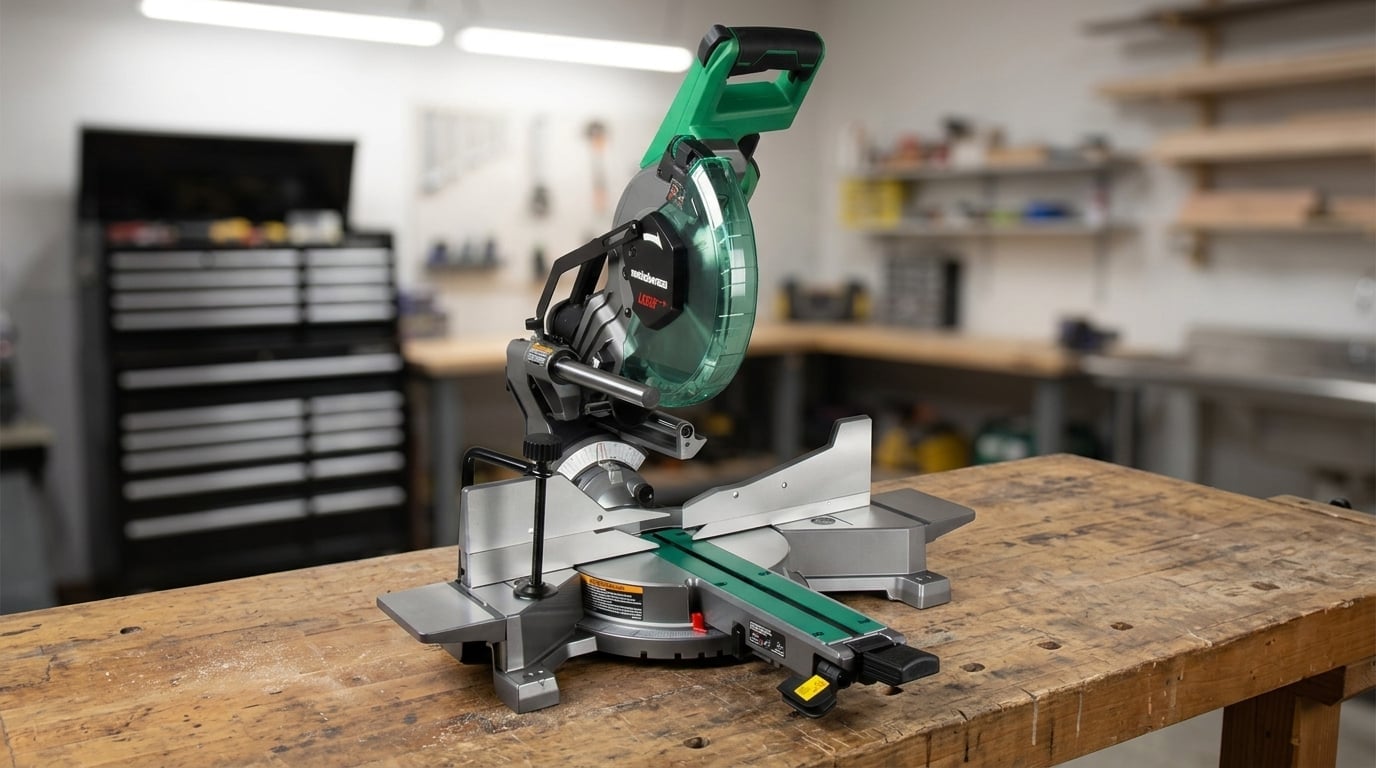
Metabo HPT enters the conversation with the C10FSHCT, a tool known for integrating zero-clearance slide technology. This design minimizes the gap between the blade and the fence, improving safety and cut quality by supporting the workpiece right up to the kerf. As a sliding compound saw, it targets users who need both capacity and precision in a single package.
Without specific price or weight data provided, it stands as a specialized option for detail-oriented carpenters who value the structural benefits of a zero-clearance system. It is worth considering if your primary concern is minimizing tear-out on delicate materials.
Milwaukee 2734-20
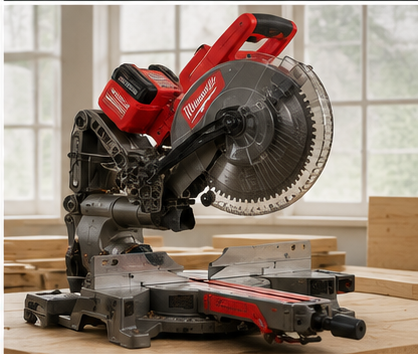
- Size: 10-inch
The Milwaukee 2734-20 breaks the corded tether entirely as a 10-inch cordless sliding compound miter saw. This model offers the freedom to work on sites without power access, using Milwaukee’s M18 battery platform for substantial runtime and torque. It suits remodelers and installers who move frequently between locations and cannot drag extension cords.
While specific pricing is not detailed here, its value lies in the convenience of cordless operation without sacrificing the sliding capacity needed for wider trim. If mobility is your top priority, this saw removes the biggest logistical hurdle of traditional miter saws.
MarvTool 10-Inch Miter Saw
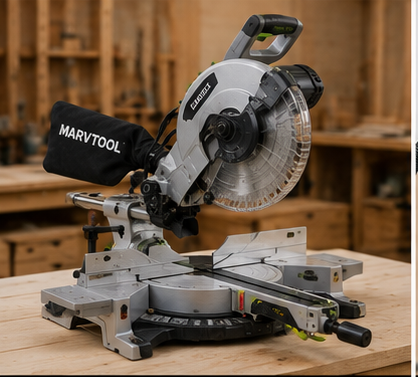
MarvTool offers a 10-Inch Miter Saw that provides an accessible entry point into sliding compound capabilities. Specific details regarding price, weight, or advanced features are not provided, but it serves as a functional option for hobbyists or occasional users who need basic sliding functionality without the premium price tag of professional-grade brands. It is a straightforward tool for simple crosscuts and miters where extreme precision or daily industrial durability is less critical.
Consider this if you need a capable saw for light home projects and want to keep costs manageable.
Festool Kapex KS 120 REB
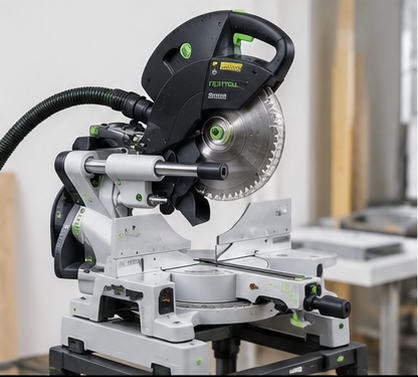
Festool’s Kapex KS 120 REB represents the apex of portable precision engineering. Known for its lightweight construction and exceptional accuracy, it is a favorite among fine woodworkers and installers who carry their tools to client sites. While specific pricing and weight are not listed here, the Kapex line is synonymous with premium build quality and dust collection efficiency.
It is not a budget tool, but for professionals who demand the highest standard of cut quality and portability, it remains a top-tier choice. This saw is for those who view their miter saw as a precision instrument rather than just a construction tool.
The main types explained
Sliding miter saws are built for different jobs. Some prioritize cutting capacity for framing, while others save space, reduce weight, or avoid the rear clearance needed by traditional rails. The main types differ in design and intended use.
- Standard 12-inch corded sliders (DeWalt DWS780, Metabo HPT C12RSH2S): These are workhorses for high-volume trim and framing. The DeWalt DWS780 has a 56-pound frame that stays steady during heavy cuts. The Metabo HPT uses a zero-clearance slide system, which helps it fit in tighter spaces. Both suit contractors who need maximum cutting depth and have room behind the saw for traditional sliding rails.
- Axial-glide 12-inch models (Bosch GCM12SD): This saw moves on a dual-bevel glide arm instead of rails. At 65 pounds, it’s heavier than many rail-based models, but it needs no rear clearance, saving bench space. It’s a good fit for woodworkers with crowded shops who still want 12-inch capacity and smooth dual-bevel adjustments.
- Rail-forward 10-inch sliders (Makita LS1019L): Here, the sliding mechanism sits in front of the blade rather than behind it. The result is a more compact footprint than a traditional 12-inch slider, with dual-bevel capability intact. This design suits finish carpenters making precise, repeatable cuts on narrower stock who need to conserve bench depth.
- Cordless 10-inch sliders (Milwaukee M18 FUEL 2734-20): These saws run on a battery platform instead of a power cord. They’re useful for remodelers and installers working in finished spaces where extension cords are impractical or unsafe. The tradeoff is limited continuous runtime in exchange for easier mobility.
How to choose
Choosing a sliding miter saw means weighing portability against cutting capacity. Match the blade size and power source to your usual job site instead of simply choosing the most expensive model.
- Choose a 12-inch model such as the DeWalt DWS780 if you regularly cut wide crown molding or large trim pieces that a smaller blade cannot handle in one pass.
- Consider the Bosch GCM12SD if you have room for a 65-pound saw. Its Axial-Glide system avoids the rear clearance needed by traditional rail sliders.
- Choose a 10-inch saw such as the Makita LS1019L if you want a lighter setup with dual-bevel capability and a rail-forward design for tighter work areas.
- Go cordless with the Milwaukee 2734-20 if you often work where reliable power is not always available. You will manage battery life instead of extension cords.
- Compare the DeWalt DWS779 and DWS780 carefully. Both weigh 56 pounds and typically cost between $599 and $649, so minor feature differences may matter more than price.
- Consider the Makita LS1019L if your budget is flexible. Its price often ranges from $549 to $750, so you may find a deal closer to the lower end for a dual-bevel tool.
The main choice is whether you need the extra width of a 12-inch blade or would benefit more from the lighter weight and smaller footprint of a 10-inch model. Choose the saw that fits your workspace and is comfortable to lift, rather than paying for features you rarely use.
Best picks by use case
If you need to cut wide boards without taking over your workbench, the Bosch GCM12SD is a smart pick. Its Axial-Glide system replaces traditional sliding rails, so you can push the saw against a wall and still handle 12-inch stock. At 65 lbs, it is heavy to lug around every day, but that weight keeps it steady during heavy framing work.
Trim carpenters who value floor space and precision may prefer the Makita LS1019L. Its rail-forward design places the sliding mechanism in front of the blade, which greatly reduces the depth needed for setup. It uses 10-inch blades and makes dual-bevel cuts, making it a good fit for detailed molding work where a compact footprint matters more than raw capacity.
On a job site without power, the Milwaukee 2734-20 removes the need for extension cords. This cordless sliding compound miter saw lets you set up anywhere, from a basement remodel to an outdoor deck build. Using a battery-powered 10-inch slider means keeping enough charged packs on hand for high-volume cutting.
Things to watch out for
Before buying a new sliding compound miter saw, keep a few practical details in mind. They can affect transport, setup, safety, and the total cost.
- The DeWalt DWS780 and DWS779 each weigh 56 lbs. You will want a sturdy stand if you plan to move either saw around a job site often.
- Bosch’s GCM12SD weighs 65 lbs because of its dual-bevel glide mechanism. Its smooth action is useful, but the extra weight makes it less suitable for tight spaces or frequent transport.
- The Milwaukee 2734-20 is cordless, so you will need to account for the cost and weight of high-capacity batteries if you want consistent cutting power through dense hardwoods.
- Makita’s LS1019L uses a rail-forward design that saves space behind the saw. It still needs careful clearance planning in front of the blade when you are cutting longer stock.
- Prices can vary significantly by season and retailer. The Bosch GCM12SD dropped to $368 in early 2026, while the DeWalt DWS780 reached $499 in late 2025, so purchase timing can often make a difference.
FAQ
Which sliding miter saw is best for tight workspaces?
The Makita LS1019L stands out because of its rail-forward design. You can push the saw right up against a wall without losing cutting capacity, which helps in a cramped garage or van.
As a 10-inch dual-bevel slider, it offers plenty of versatility without the large footprint of some 12-inch models. With limited floor space, this design is easier to position than a traditional rear-rail slider.
Do I really need a corded saw, or is cordless viable?
Cordless is a viable option now. The Milwaukee 2734-20 shows that battery power can handle sliding compound tasks, while eliminating the tether makes setup and teardown on job sites faster.
Corded options such as the DeWalt DWS780 and DWS779 still provide consistent power without charge cycles. Both weigh 56 lbs and work well for heavy, continuous use, where changing batteries could slow you down.
What makes the Bosch GCM12SD different from standard sliders?
It uses an Axial-Glide system instead of the traditional steel rails found on most other saws. Because the system doesn’t need rear clearance, you can place the unit flush against a wall and still use its full 12-inch cutting range.
The trade-off is weight. At 65 lbs, it’s heavier than many competitors. That extra mass can improve stability during wide crosscuts, and the glide mechanism tends to stay smoother over time because there are no rails to collect dust and debris.
Are there lightweight or budget-friendly sliding options?
Lighter or more accessible options include the Metabo HPT C10FSHCT and MarvTool 10-Inch Miter Saw. These models may suit DIYers or trim carpenters who value portability over industrial-grade heft.
Festool’s Kapex KS 120 REB is another option for users who prioritize precision and portability in a high-end package. Specific weights vary across these models, and they are generally easier to transport than heavier 12-inch models, making them practical choices if you move your shop frequently.
Conclusion
If you need raw capacity and don’t mind the heft, the DeWalt DWS780 remains the workhorse choice. The Bosch GCM12SD takes up less space with its unique glide system. For better portability or a lower price, the cordless Milwaukee 2734-20 and compact Makita LS1019L offer sensible compromises without sacrificing cut quality.
Choose the saw that fits your shop and power setup.