5 Best Water-Free Dry Cleaning Solvents for Upholstery in 2026
Water stains can ruin S-code fabrics, and many cleaners do not handle them well. These fabrics need a solvent that lifts dirt without saturating the fibers or leaving a ring. The five options below take different routes—liquid solvent, foam, machine-assisted cleaning, concentrated solvent, and dry powder—so the useful question is not simply which one is strongest, but which method fits the fabric and the job.
Which water-free solvent actually works on your sofa?
Dryel CRB-12000v2
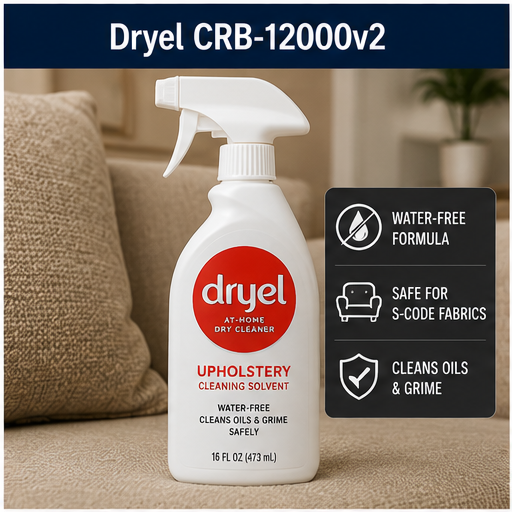
Dryel CRB-12000v2 is positioned as a water-free cleaning solvent for upholstery, making it the clearest starting point for strict S-code fabrics. It avoids water and relies on solvent action to address oils and grime without saturating the fibers. If the care tag explicitly forbids moisture, that constraint matters more than choosing the most aggressive formula.
It suits homeowners looking for a dedicated option for delicate materials that cannot handle even damp cloths. Its place as the general-purpose pick becomes clearer when compared with the more specialized powder, foam, and concentrated-solvent choices below.
BISSELL 0935D
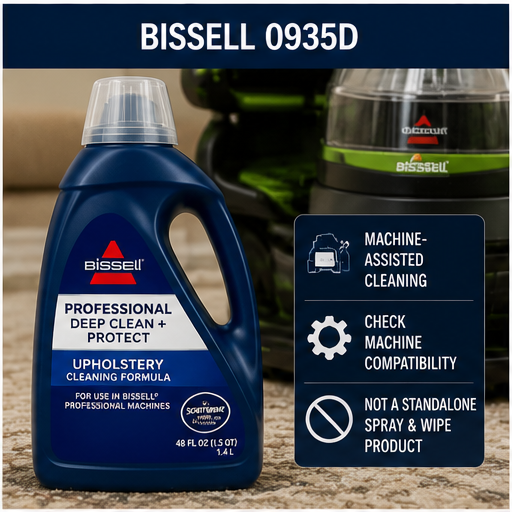
BISSELL 0935D takes a different path: it is aimed at users seeking a machine-assisted approach to dry cleaning. Specific formulation details are sparse, so its appeal depends less on a precisely described solvent blend and more on whether it fits the equipment already available.
Check machine compatibility before purchasing. This is not a straightforward standalone spray-and-wipe product, which makes it a less natural choice for someone treating one cushion by hand.
No Wet Wonder Foam
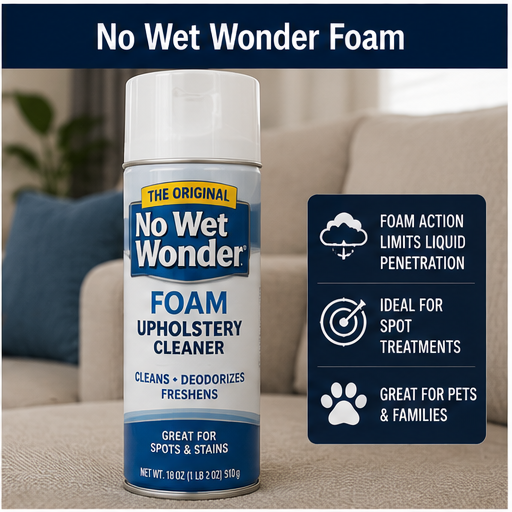
No Wet Wonder Foam is made for upholstery cleaning and uses foam to limit liquid penetration. That makes it useful when the priority is controlled spot treatment rather than a fully dry powder process or a concentrated liquid solvent.
The tradeoff is scope: foam can be practical for localized surface dirt, but it is not automatically the better answer for embedded grime. Pet owners and parents may find the format convenient for frequent messes on synthetic blends.
Solv-A-Clene Upholstery and Drapery Dry Cleaning Solvent
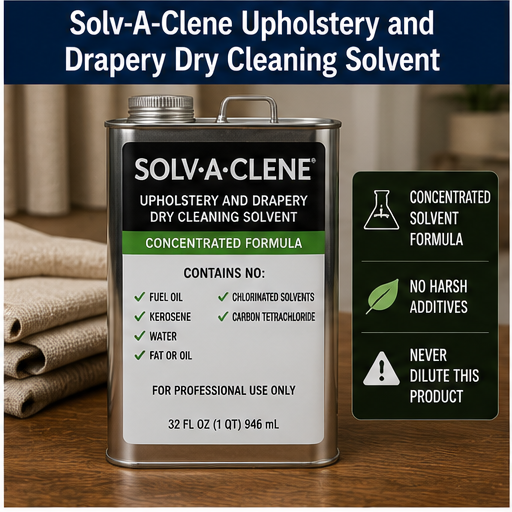
Solv-A-Clene Upholstery and Drapery Dry Cleaning Solvent contains no fuel oil, kerosene, water, fat, oil, chlorinated solvents, or carbon tetrachloride. That composition gives it a more focused role than a general maintenance cleaner: it is the concentrated solvent option for upholstery and drapery jobs where an undiluted formula is important.
Never dilute this product. Its strength is part of the reason to choose it, but that same strength makes careful, targeted use more appropriate than treating every surface as though it were interchangeable.
Capture dry-powder upholstery cleaner
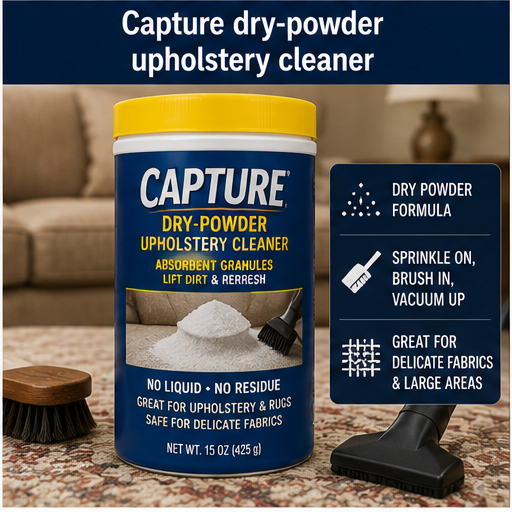
Capture’s dry-powder formula avoids the liquid-versus-foam decision altogether. Its absorbent granules lift dirt and freshen materials without adding liquid, making it suitable for upholstery and rugs that cannot tolerate moisture, including delicate fabrics like silk brocade.
Sprinkle it on, brush it in, and vacuum it up. That process is especially relevant for large area rugs or heavily textured furniture, where a liquid spray could create more moisture-management work than the cleaning itself.
The main types explained
These products are not interchangeable simply because they are marketed for dry cleaning. They fall into four groups: liquid solvents, pure chemical solvents, dry powders, and foam cleaners. The care label comes first; after that, the application method determines how much control you have over moisture, coverage, and cleanup.
Liquid solvent sprays (Dryel CRB-12000v2, Blue Coral DC22): These suit S-code fabrics that forbid water. Dryel is positioned as a general-purpose water-free solvent, while Blue Coral uses a milder formula for sensitive materials that still need a liquid cleaner without the risk of water stains.
Pure chemical solvents (Solv-A-Clene): This formula contains only the cleaning agent, without fuel oil, kerosene, or chlorinated additives. It suits heavier drapery and upholstery jobs where an undiluted formula matters more than gentle conditioning.
Dry-powder systems (Capture): Absorbent granules lift dirt and freshen the material without spraying liquid. This is the most moisture-averse option, especially for delicate weaves such as silk brocade or rugs that cannot tolerate dampness.
Foam cleaners (No Wet Wonder Foam): Foam provides cleaning action without a soaking liquid or dry powder. It fits general upholstery maintenance when avoiding saturation matters but a powder process is less convenient.
How to choose
Start with the fabric label, then decide what kind of work you are willing to do. A liquid solvent may be more direct for spot treatment, foam may be easier to control on a vertical surface, and powder may make the most sense when moisture itself is the central problem. That distinction explains why there is no single best format for every sofa.
Choose Capture dry powder if you want to avoid over-wetting delicate fibers. Its powder absorbs dirt without adding liquid moisture.
Choose No Wet Wonder Foam for vertical surfaces such as chair backs. Foam clings in place during spot treatment instead of running like a liquid.
Select Solv-A-Clene for heavy grime on durable upholstery. Its solvent formula suggests stronger chemical action than the gentler foam or powder options.
Pick BISSELL 0935D if you already own a BISSELL cleaning machine. This model is designed to work with the brand’s extraction equipment rather than as a standalone hand spray.
Opt for Dryel CRB-12000v2 if you prefer a kit. This version likely includes the applicators or bags needed for a contained cleaning process instead of just a bottle of fluid.
The main dividing line remains moisture tolerance. If the upholstery cannot handle moisture, Capture’s powder is the clearest fit among these five. Otherwise, match foam, liquid, or machine application to the area being cleaned and to the amount of blotting and drying you are prepared to manage.
Best picks by use case
For a full sofa refresh without dragging a machine out of the closet, Capture dry-powder upholstery cleaner is a practical choice. Sprinkle it on, let it sit, then vacuum it up. The dry process keeps the decision simple when liquid cleaners are a concern.
For stubborn spots, try Solv-A-Clene Upholstery and Drapery Dry Cleaning Solvent. Available on Amazon, this liquid solvent is suited to drapes and heavier upholstery where foam may not be enough. Use it on specific problem areas rather than treating it as an all-over refresh.
No Wet Wonder Foam offers a quick, low-mess way to deal with surface dirt. Its foam formula helps limit how much liquid reaches the cushion underneath, making it a reasonable maintenance option between deeper treatments. The earlier distinction still applies: convenience does not make it a substitute for a stronger solvent or a moisture-free powder in every case.
Things to watch out for
Before applying anything, check the care tag. Water-free solvents are typically the right category for S-code fabrics that forbid moisture, but “water-free” does not remove the need to match the product and process to the material.
Never dilute Solv-A-Clene. Its chemical balance excludes water, fuel oil, and chlorinated solvents, allowing it to work as an undiluted solvent on upholstery and drapery.
Capture’s dry-powder formula is for low-moisture cleaning. Its absorbent granules lift dirt from sensitive materials such as silk brocade, which cannot tolerate liquid.
Water-free solvents are usually the best choice for S-code fabrics that need waterless cleaning instead of standard steam or shampoo.
FAQ
Which dry cleaning solvent actually works on tough upholstery stains?
If the problem is set-in grime rather than surface dust, Solv-A-Clene Upholstery and Drapery Dry Cleaning Solvent is the heavy-duty choice in this group. It is formulated for upholstery and drapery work without soaking the fabric, making it a candidate for targeted treatment of high-traffic areas.
Its concentrated solvent approach is the reason to consider it over foam, but also the reason to follow the dilution warning closely. Choose it for the tougher job, not merely because it is available.
Is there a water-free option for quick surface refreshes?
For light maintenance or fresh spills before they set, No Wet Wonder Foam offers a controlled approach. It applies as foam, helping limit over-wetting while allowing surface dirt to be addressed without a dry-powder process.
It fits fabrics that cannot handle much moisture, though it will not replace a deeper treatment for old stains. That makes it a maintenance choice rather than the universal answer to upholstery cleaning.
What is the best choice for carpets and heavy-duty fabric cleaning?
Capture dry-powder upholstery cleaner takes a different route, using absorbent powder rather than liquid or foam. You sprinkle it on, work it into the fibers, and vacuum it up, which lifts dirt without introducing moisture.
This is particularly useful for large areas or fabrics prone to water rings. Its value is not only the cleaning method but the reduced need to manage damp material afterward.
Do I need special machines for these dry cleaning products?
Most of the options here are designed for manual application. BISSELL 0935D is the exception to treat carefully: although it comes from a brand associated with machines, check its compatibility and do not assume it is a standalone hand-applied product.
For the solvents, foam, and powder, simple hand tools such as brushes, cloths, or an existing vacuum cleaner may be enough. The method you choose therefore affects the equipment question as much as the formula does.
Conclusion
Dryel CRB-12000v2 is the best all-purpose starting point for water-free upholstery care, particularly when an S-code label rules out moisture. Capture is the better fit when keeping moisture exceptionally low is the priority, while No Wet Wonder Foam favors controlled surface maintenance. For tougher, more concentrated solvent work, choose Solv-A-Clene—and remember that the care label should determine the category before any product becomes the final pick.